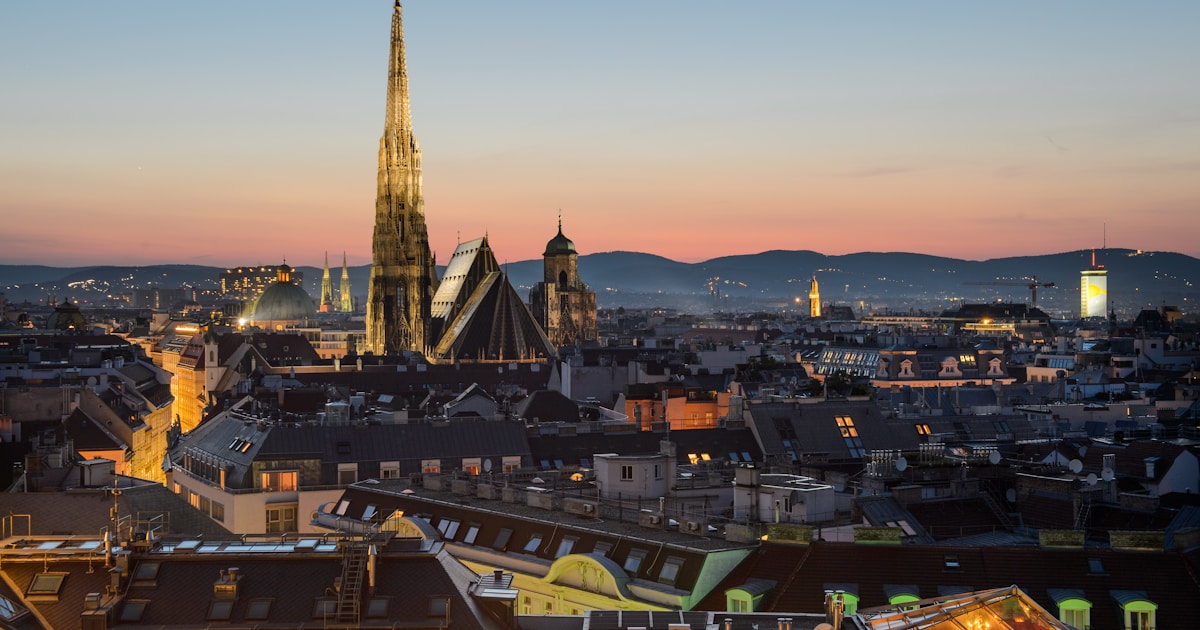
Studying Abroad in Vienna: 2 Weeks at The Social Hub & Falling in Love with Austria | TravelDiari
traveldiari_admin
A personal journey from an Indiana University student discovering Vienna’s museums, wine culture, food scene, and student life in Austria’s imperial capital
Vienna study abroad Indiana University The Social Hub Austria travel Student life Vienna
Two weeks ago, I stepped off the plane at Vienna International Airport as an Indiana University
study abroad student, not quite knowing what to expect. I’d heard Vienna was beautiful, historic,
and sophisticated — but nothing prepared me for just how deeply this city would captivate me in
such a short time.
From my first Wiener Schnitzel to wandering through world-class museums on student discounts, from
braving the February cold to discovering cozy wine taverns with fellow IU students, Vienna has already
become more than just a study destination. It’s become a second home. Here’s everything I wish I’d
known before arriving, and why Vienna should be at the top of every student’s study abroad list.
Life at The Social Hub: Where Study Abroad Students Actually Want to Live
Indiana University arranged housing for us at The Social Hub, and I genuinely
can’t imagine a better setup for study abroad students. This isn’t your typical dorm or apartment —
it’s a hybrid student housing concept designed specifically for international students and young
travelers.
What Makes The Social Hub Special
Located in Vienna’s vibrant neighborhoods, The Social Hub combines private rooms with incredible
communal spaces. My room has a private bathroom, comfortable bed, desk setup for studying, and
fast WiFi — essentials for balancing classes with exploring the city.
But the real magic happens in the common areas:
Study lounges — Quiet zones with natural light, perfect for group projects or solo work
Social kitchen — Fully equipped where students cook together, saving money and making friends
Game room & bar — Weekly events, trivia nights, and spontaneous hangouts
Gym — Small but functional, helps maintain routine while abroad
Coworking spaces — Professional atmosphere when you need to buckle down
Rooftop terrace — Stunning Vienna views (though we haven’t used it much in February!)
Personal Note: The community aspect is what sold me. Within three days, I’d met
students from Germany, Spain, the Netherlands, and other IU students. We’ve formed study groups,
explored Vienna together, and created a support system that makes being away from Indiana feel
less daunting. Last weekend, six of us cooked a massive international dinner — Austrian schnitzel
meets American mac and cheese meets Spanish paella. Chaos, but amazing.
Ready to Plan Your Trip to Vienna?
Use TravelDiari to search Vienna hotels, create your custom itinerary, and build a wishlist of must-see attractions.
The Social Hub’s location is strategic — close enough to central Vienna (15-20 minutes by U-Bahn),
but in a neighborhood with local grocery stores, cafes, and restaurants. This balance lets you
live like a local while having easy access to tourist sites and university facilities.
Vienna’s public transportation is exceptional. The Semesterticket (semester pass
for students) costs around €75 and gives unlimited access to all U-Bahn (subway), S-Bahn (commuter
rail), tram, and bus lines. It pays for itself in a week. Download the WienMobil app — it’s your
lifeline for navigation.
Vienna’s Weather in February: What to Actually Expect (And Pack)
I’m from Indiana, so I thought I was prepared for cold. Vienna’s February is a different beast —
not necessarily colder (temperatures hover around 0-5°C / 32-41°F), but the cold feels sharper
because of wind and humidity.
My Honest February Weather Report
Average temperatures: 0-5°C (32-41°F), occasionally dipping to -3°C (27°F) at night
Precipitation: Mix of rain, sleet, and occasional snow — often gray and drizzly
Daylight: Sun rises around 7:15 AM, sets around 5:30 PM (getting longer daily)
Wind: Can be biting, especially near the Danube or in open squares
Indoor escapes: Abundant — museums, cafes, markets are warm sanctuaries
What I Wish I’d Packed (And What I Had to Buy Here)
Essential items:
Waterproof winter coat (mine wasn’t waterproof — learned that the hard way)
Silver lining: The cold forces you into Vienna’s incredible cafe culture. When you’re
freezing after a museum visit, ducking into a traditional Viennese coffee house for Sachertorte and
hot chocolate becomes a survival strategy — and honestly, one of my favorite parts of the experience.
When Should You Visit Vienna? Best Times for Different Experiences
While I’m experiencing winter Vienna, here’s what I’ve learned about different seasons from locals
and other students who’ve studied here:
🌸 Spring (March-May) — Best Overall
Widely considered the best time for study abroad. Temperatures rise to 10-20°C (50-68°F), flowers
bloom in palace gardens, outdoor cafes open, and the city shakes off winter gloom. Easter markets
appear in late March/April. Perfect weather for exploring without summer crowds.
☀️ Summer (June-August) — Vibrant but Crowded
Warmest weather (20-30°C / 68-86°F), long daylight hours, outdoor festivals, and rooftop bars in
full swing. However, peak tourist season means crowded museums and higher accommodation prices.
Many Viennese leave the city in August. Great for outdoor concerts and Danube Island activities.
🍂 Fall (September-November) — Underrated Gem
Similar to spring but with autumn colors, wine harvest season (Heuriger wine taverns are magical),
fewer tourists, comfortable temperatures (10-18°C / 50-64°F). September and early October are
ideal — November gets gray and rainy like February.
❄️ Winter (December-February) — Magical if You’re Prepared
Christmas markets in December are world-famous and genuinely enchanting. January-February are
coldest and darkest but also when you experience Vienna at its most authentic. Ball season
(January-February) is unique to Vienna — formal waltzing events across the city. Budget-friendly
due to low tourist numbers.
My recommendation for study abroad students: Spring semester (February-June) gives
you the full range — you arrive in winter, experience ball season and cozy culture, then watch
Vienna transform into spring glory. Fall semester (September-December) offers wine season and
Christmas markets. Both are incredible, just different vibes.
Planning Your Study Abroad Trip?
Use TravelDiari to find student-friendly accommodations, create your Vienna itinerary, and discover budget travel tips for studying in Europe.
Vienna’s Museum Scene: World-Class Art on a Student Budget
This is where Vienna absolutely spoils students. The city has over 100 museums, and many offer free or heavily discounted student admission. I’ve visited six museums in two
weeks, and here are my must-sees:
🎨 Kunsthistorisches Museum (Art History Museum)
One of the world’s finest art museums, housed in a palace. The building itself is artwork —
marble staircases, gold-leaf ceilings, frescoes everywhere. Collections include Old Masters
(Bruegel, Raphael, Vermeer), Egyptian artifacts, and Greek/Roman antiquities.
Student tip: €8 with student ID (regular €21). Go on a rainy afternoon and
spend 3-4 hours. The cafe under the dome has overpriced but stunning atmosphere — perfect for
a study break. Download the museum app for free audio guide.
🖼️ Belvedere Palace & Museum
Two baroque palaces (Upper and Lower Belvedere) with world-class Austrian art. Upper Belvedere
houses Klimt’s “The Kiss” — seeing it in person was surreal, even more golden and intricate
than photos suggest.
Student discount: €14.50 for Upper Belvedere. The palace gardens are free and
offer Instagram-worthy views of Vienna. Winter visits mean fewer crowds around famous paintings.
🏛️ Naturhistorisches Museum (Natural History Museum)
Often overlooked but absolutely fascinating. Dinosaur skeletons, meteorite collections, Venus
of Willendorf (25,000-year-old figurine), and a planetarium. The building mirrors the Art
History Museum across the square.
Student price: €5 (steal of the century). Great for a lighter cultural day
when you need a break from heavy art.
🎵 Haus der Musik (House of Music)
Interactive music museum where you can conduct the Vienna Philharmonic (virtually), compose
music, and learn about famous composers like Mozart and Beethoven. Super engaging, not your
typical “look but don’t touch” museum.
Student rate: €8. Perfect for music students or anyone interested in Vienna’s
musical heritage. Takes 2-3 hours.
Pro tip from experience: Many museums participate in “Lange Nacht der
Museen” (Long Night of Museums) in October — one ticket (€15) gets you into 700+ museums
from 6 PM to 1 AM. Also, some museums have free admission on specific days or evenings. Check
museum websites or ask at student services.
I came to Vienna expecting to eat well. I did not expect to gain 5 pounds in two weeks. The food
culture here is no joke — and as a student, you can eat incredibly well without breaking the bank.
Must-Try Traditional Austrian Dishes
Wiener Schnitzel
Breaded and fried veal cutlet (though pork versions are common and cheaper). It’s massive —
often hangs off the plate. Best served with potato salad and lingonberry jam. My favorite so
far: Figlmüller (touristy but legendary) and Schnitzelwirt (local favorite, cheaper).
Sachertorte
Vienna’s signature chocolate cake with apricot jam filling, invented at Hotel Sacher. Dense,
rich, not overly sweet. Pair with unsweetened whipped cream (Schlagobers). Cafe Sacher is the
original but expensive (€8 a slice). Demel is the rival. Honestly, every cafe has good versions
for €4-6.
Tafelspitz
Boiled beef served with horseradish, apple sauce, and crispy potatoes. Emperor Franz Joseph’s
favorite dish. Sounds simple, tastes incredible. Try it at Plachutta (student-budget splurge).
Käsekrainer
Cheese-filled sausage sold at Würstelstände (sausage stands) all over the city. Perfect late-night
food after studying or going out. Costs €4-5 with bread and mustard. Authentically Viennese
experience.
Apfelstrudel
Warm apple strudel with vanilla sauce. Every bakery has it. Café Landtmann and Café Central have
famous versions, but honestly, the €3 version from a local bakery is almost as good.
Student-Budget Eating Strategy
Lunch menus (Mittagsmenü): Many restaurants offer 2-3 course lunch deals
for €8-12, way cheaper than dinner
Billa, Spar, Hofer: Supermarket chains where we buy groceries for cooking
at The Social Hub
Naschmarkt: Massive outdoor market with affordable international food stalls
— Turkish, Middle Eastern, Asian. Lunch for €6-8
University Mensas: Student cafeterias open to all students, meals €4-7
Bakeries (Bäckerei): Fresh sandwiches, pastries, coffee for €5-6 total
Real talk: I budget €200-250/month for food by cooking most dinners at The Social
Hub and treating myself to 2-3 restaurant meals per week. It’s doable if you’re strategic about
grocery shopping and don’t eat out every meal.
Vienna’s wine culture is something I knew nothing about before arriving. Austria produces excellent
wine (Grüner Veltliner is the signature white), and Vienna is the only major capital city with
significant vineyards within city limits.
What Are Heurigen?
Heurigen are traditional wine taverns where local winemakers serve their own wines, usually in
rustic settings on the outskirts of Vienna (neighborhoods like Grinzing, Neustift, and Nussdorf).
The atmosphere is communal — long wooden tables, simple food buffets, accordion music, locals
and tourists mixing together.
Wine is served by the Viertel (quarter liter) or Achtel (eighth
liter) in simple glass tumblers. It’s casual, affordable, and authentically Viennese.
My First Heuriger Experience
Last Saturday, a group of us from The Social Hub took the tram to Grinzing. We walked uphill
through cobblestone streets, following hanging pine branches (the traditional sign that a Heuriger
is open and serving new wine).
We settled at Heuriger Zimmermann, ordered Grüner Veltliner (€3.50 for an Achtel),
and filled plates from the buffet — cold cuts, cheese, bread, potato salad, pickles. Total cost
for three hours of eating, drinking, and soaking in atmosphere: about €15 per person.
The wine was crisp, light, and refreshing — nothing like the heavy California wines I’m used to.
An accordion player wandered between tables playing traditional songs. Locals sang along. It felt
like stepping into old Austria.
Wine Tips for Students
Legal drinking age: 16 for beer and wine, 18 for spirits (much lower than US)
Heuriger season: Best in spring and fall, but some open year-round
Budget: €10-20 for several glasses of wine and food at a Heuriger
Public transport: Trams serve Grinzing, Neustift areas — easy to reach safely
Drink responsibly: Wine is cheap and easy to over-consume. Pace yourself, eat food
Cultural note: Austrians drink socially but rarely to excess the way American
college culture does. Drinking is about conversation, enjoyment, and socializing — not getting
wasted. Embrace this approach. You’ll appreciate Vienna more the next morning.
Discover More European Study Abroad Destinations
Explore our complete guides to student-friendly cities across Europe, budget tips, and cultural insights.
Essential Attractions: What to See in Your First Month
🏰 Schönbrunn Palace
The Habsburgs’ summer residence with 1,441 rooms (you can tour 40). The gardens are free and
massive — even in winter, worth exploring. Climb to the Gloriette pavilion for panoramic Vienna
views.
Student tip: Grand Tour ticket is €20 with student ID. Go early (9 AM) or late
afternoon to avoid tour groups. The palace is accessible via U4 metro.
⛪ St. Stephen’s Cathedral (Stephansdom)
Vienna’s iconic Gothic cathedral in the heart of the city. Free to enter the main area, but pay
to climb the 343 steps of the South Tower for incredible views (€6 student rate, totally worth
the leg workout).
🎪 Prater Park & Giant Ferris Wheel
Massive public park with a permanent amusement area. The Wiener Riesenrad (Giant Ferris Wheel)
is an icon from “The Third Man” film. Ride costs €13.50 (€10 student), but the park itself is
free to wander. Great for running or biking.
🏛️ Hofburg Palace
Former imperial winter residence, now housing museums, the Austrian president’s office, Spanish
Riding School, and Imperial Apartments. The Sisi Museum about Empress Elisabeth is fascinating.
Student entry: €13.50.
🎼 Vienna State Opera
World-class opera house with an incredible secret for students: standing room tickets
cost €10-15 and give access to full performances. Line up 80 minutes before showtime. It’s a
quintessential Vienna experience.
Student Life: Balancing Academics, Exploration & Social Life
Let’s be real about study abroad: it’s easy to get overwhelmed by wanting to see everything while
keeping up with classes. Here’s what I’ve learned in two weeks:
Academic Balance
Indiana University’s Vienna program includes intensive language courses, Austrian culture classes,
and field trips integrated into curriculum. Classes meet 3-4 times per week, leaving long weekends
for travel.
I study at The Social Hub’s quiet lounges or in Vienna’s iconic coffee houses (Café Central, Café
Sperl — bring student ID for discounts). The cafe culture supports long study sessions over a
single coffee without pressure to leave.
Weekend Travel from Vienna
Vienna’s central European location makes weekend trips incredibly accessible:
Salzburg: 2.5 hours by train — Mozart, Sound of Music, Alps
Prague: 4 hours by bus/train — medieval charm, cheap beer
Budapest: 2.5 hours by train — thermal baths, ruin bars
Bratislava: 1 hour by train — Slovakia’s capital, underrated
Lake Bled, Slovenia: 4 hours — stunning mountain lake
Use TravelDiari
to plan these trips and find student-friendly accommodations.
Social Integration
The Social Hub hosts events specifically for international students — weekly pub crawls, cultural
dinners, day trips. It’s the easiest way to build a friend group fast.
Join university clubs, attend language exchange meetups (Tandem programs), and say yes to invitations.
Study abroad friendships form quickly because everyone’s in the same boat.
Practical Tips: Money, Safety & Daily Life
💶 Budget & Money Management
Monthly student budget breakdown:
Accommodation (The Social Hub): ~€650-800/month (often included in program fees)
Open a free Austrian bank account (N26 or Erste Bank) to avoid international fees. Always carry
some cash — smaller vendors don’t take cards.
🚨 Safety
Vienna is one of Europe’s safest cities. I’ve walked alone at night without issues. Normal precautions
apply: watch belongings in crowds, be aware in tourist areas, don’t leave drinks unattended.
📱 Phone & Internet
Get an EU SIM card (HoT, Drei, or Magenta) for €10-20/month with data. The Social Hub has free WiFi,
but mobile data is essential for navigation and communication.
🏥 Healthcare
Ensure you have international health insurance through Indiana University or private provider. EU
healthcare is excellent and affordable. Pharmacies (Apotheke) are everywhere for minor issues.
🗣️ Language
Most Viennese speak English, especially younger people and in tourist areas. Still, learn basic
German phrases — locals appreciate the effort. “Grüß Gott” (greeting), “Bitte” (please), “Danke”
(thank you), “Entschuldigung” (excuse me).
What I’ve Learned in Two Weeks (That You Can’t Read in Guidebooks)
Vienna moves at its own pace. Don’t rush. Cafes are for lingering, museums
deserve full afternoons, walks should be meandering. This isn’t a city to check boxes — it’s a
place to absorb.
Viennese coffee culture is sacred. A coffee (Melange, Einspänner, Brauner)
comes with water and often a small cookie. You’re welcome to sit for hours with one drink. Embrace
it. Some of my best study sessions and journal writing happen in these cafes.
The city is layered with history. Every building has a story. Mozart, Beethoven,
Freud, Klimt — they all lived here. You’ll walk past Mozart’s apartment on the way to class. It’s
surreal and grounding simultaneously.
Austrians appreciate formality. Say “Grüß Gott” when entering shops, “Auf
Wiedersehen” when leaving. Use “Sie” (formal you) with strangers and older people. Small courtesies
matter.
Winter Vienna has a different magic. Yes, it’s cold and gray, but cozy wine
taverns, thermal-heated cafes, Christmas market vibes (even into February in some places), and
fewer tourists create intimacy. You experience Vienna as residents do.
The Social Hub community becomes family. Study abroad can be lonely. Living in
student housing designed for international students creates built-in support. Some of my floormates
are already lifelong friends.
Most importantly: Vienna rewards curiosity. Get lost in the 1st District. Talk
to the woman at the bakery. Ask your waiter for recommendations. Join the random concert in a
church courtyard. These unplanned moments define the experience more than any guidebook itinerary.
Resources for Future Vienna Study Abroad Students
Indiana University Office of Overseas Study: Program applications, scholarships, pre-departure guidance
The Social Hub Vienna: Check their website for room tours and community events
TravelDiari:
Plan Vienna itinerary and weekend trips across Europe
Wien.info: Official Vienna tourism site with student discounts
ÖBB (Austrian Railways): Book trains for weekend travel
Flixbus: Cheap bus travel to Prague, Budapest, Munich
Meetup.com: Language exchanges and international student events
Ready to Plan Your Study Abroad Adventure?
Whether it’s Vienna or another European city, TravelDiari helps you find the best student accommodations, budget travel tips, and personalized itineraries.
Two weeks in, I’m already dreading having to leave in a few months. Vienna has this way of seeping
into you — the music drifting from open church doors, the smell of fresh bread from bakeries, the
satisfying crunch of boots on cobblestones, the warmth of a Heuriger after a cold walk.
For Indiana University students or anyone considering study abroad, Vienna offers the perfect
balance: world-class academics, rich history, incredible arts scene, central European location
for travel, and a pace of life that lets you actually enjoy the experience rather than just
survive it.
The Social Hub creates community. The city creates wonder. The combination creates transformation.
If you’re on the fence about studying abroad or choosing Vienna specifically — do it.
Pack warm clothes, bring an open mind, and prepare to fall in love with a city that feels simultaneously
imperial and intimate, historic and vibrant, foreign and strangely like home.
See you in Vienna.
Quick Vienna Study Abroad Checklist
✅ Apply to Indiana University Vienna program (or your university’s equivalent) 6-12 months ahead
✅ Secure housing (The Social Hub or university housing) early
✅ Get international health insurance
✅ Book flights 2-3 months in advance for best prices
✅ Pack for cold weather if arriving in winter/spring
✅ Bring adapters for European outlets (Type C/F)
✅ Set up international banking/travel credit card with no foreign fees